Lavonshia
The epic fantasy world of The Lavonshia Chronicles, beginning with Storm Grazer Rising by Eric Munger.
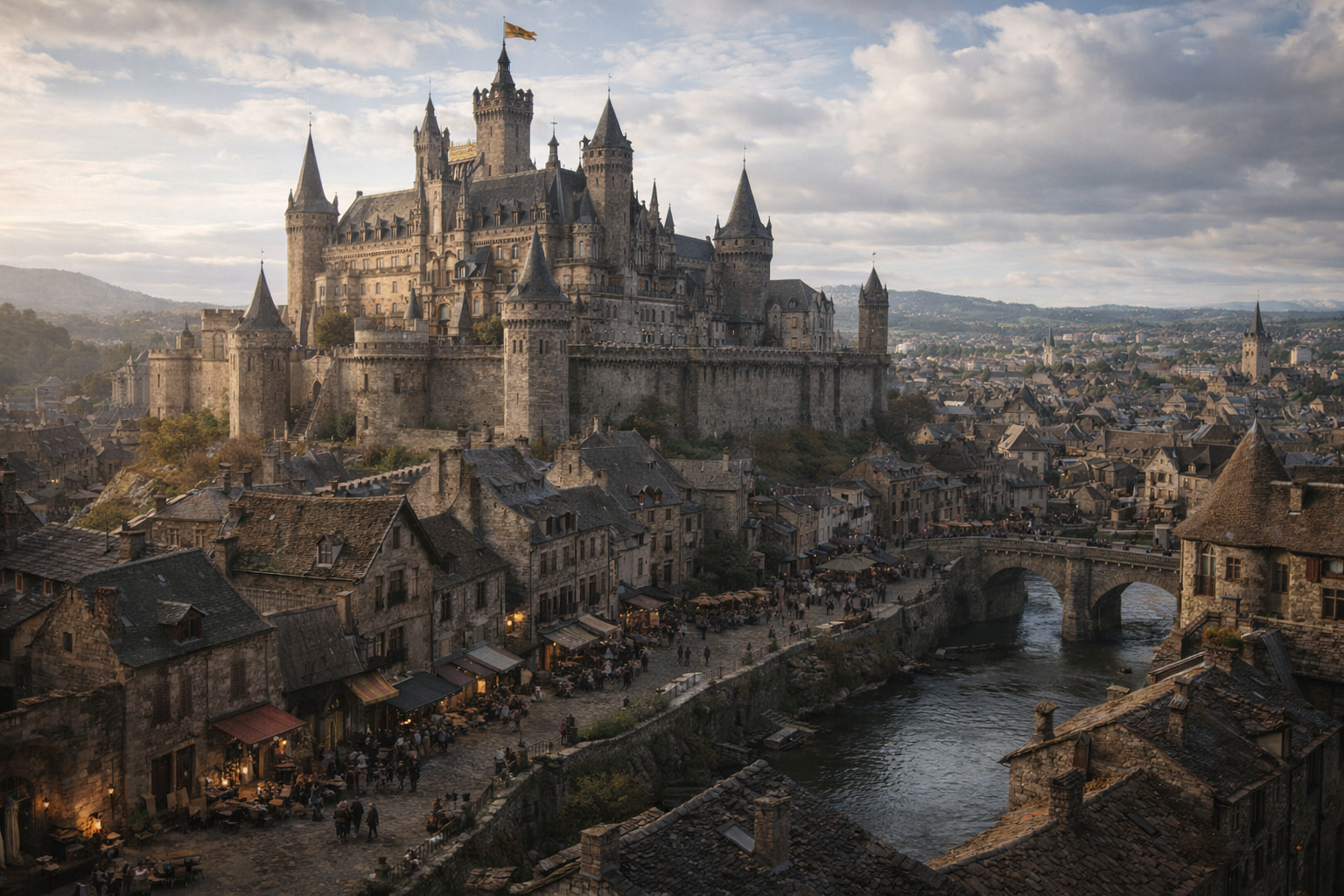
The Kingdom of Lavonshia
Lavonshia is an agrarian realm shaped by fields, orchards, and trade. Marketplaces anchor daily life, with Lavon spoken throughout the kingdom and decri serving as the common coin that keeps commerce moving.
Peace is maintained by the Ka, whose presence is steady rather than oppressive. The King rules as sovereign with wisdom and kindness, favoring stability and trust over fear. In the background, the Gray Cloaks remain largely unseen, their purpose known to few.
The Tol Mountains divide Lavonshia both geographically and ideologically, shaping regional identity and quiet tension. Beyond them, Dorak stands apart — isolated by terrain and distance, and content to remain separate from the rest of the kingdom.
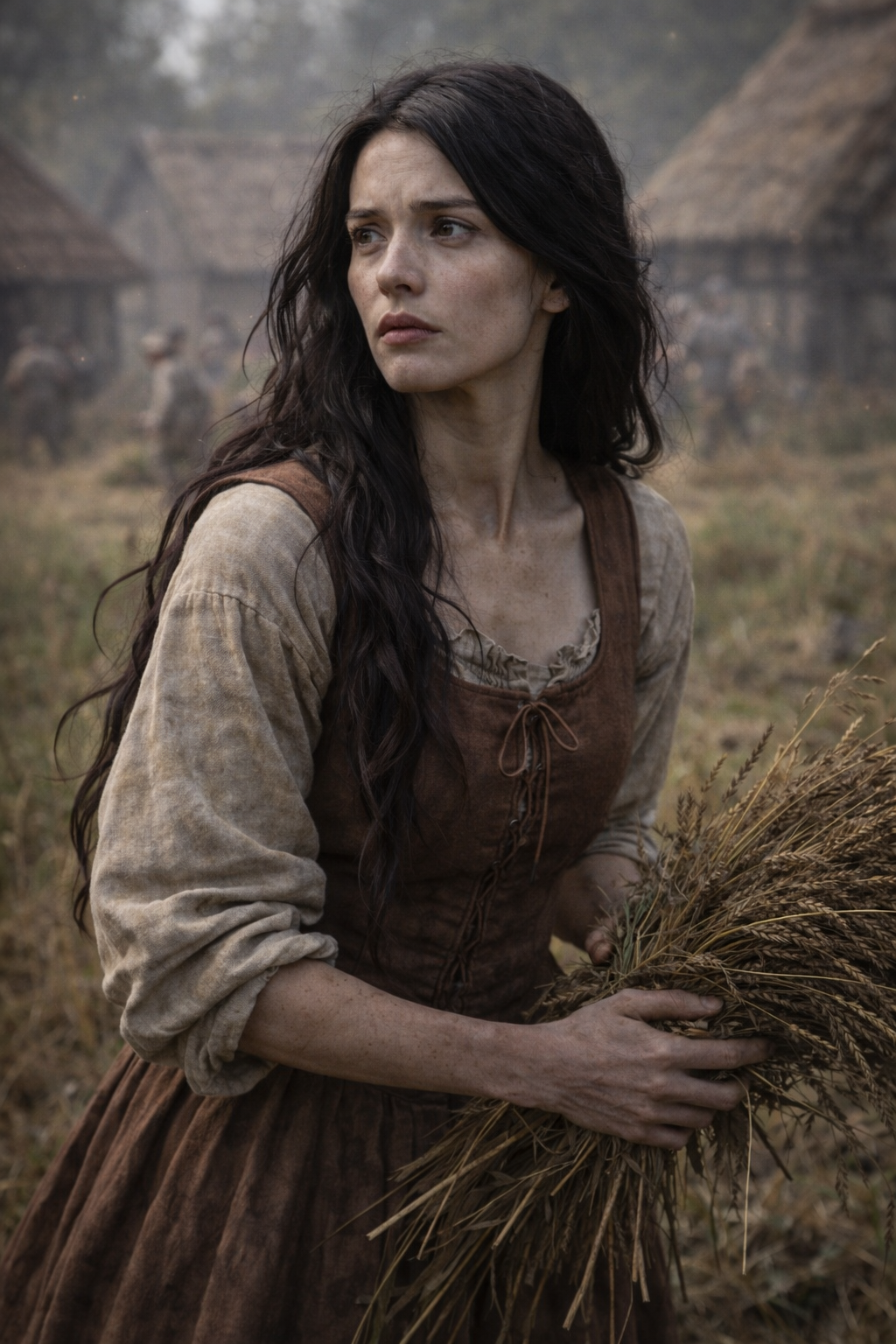
Aurelia Talbot
Aurelia is shaped by the quiet rhythms of rural life — seasons marked by planting and harvest, and days defined by steady, necessary work. Raised in a close-knit agricultural community, she learns patience, cooperation, and endurance long before she ever understands power.
Sheltered by that life, Aurelia grows up a little naïve, but openly kind and deeply helpful. She is shaped by shared labor, local festivals, and traditions passed down through generations, and by a community where people rely on one another and lend help without being asked.
When events beyond her choosing begin to intrude, Aurelia carries those lessons with her. The resilience, discipline, and grounded perspective she gained from the fields and celebrations of her youth remain her anchor as the world around her begins to change.
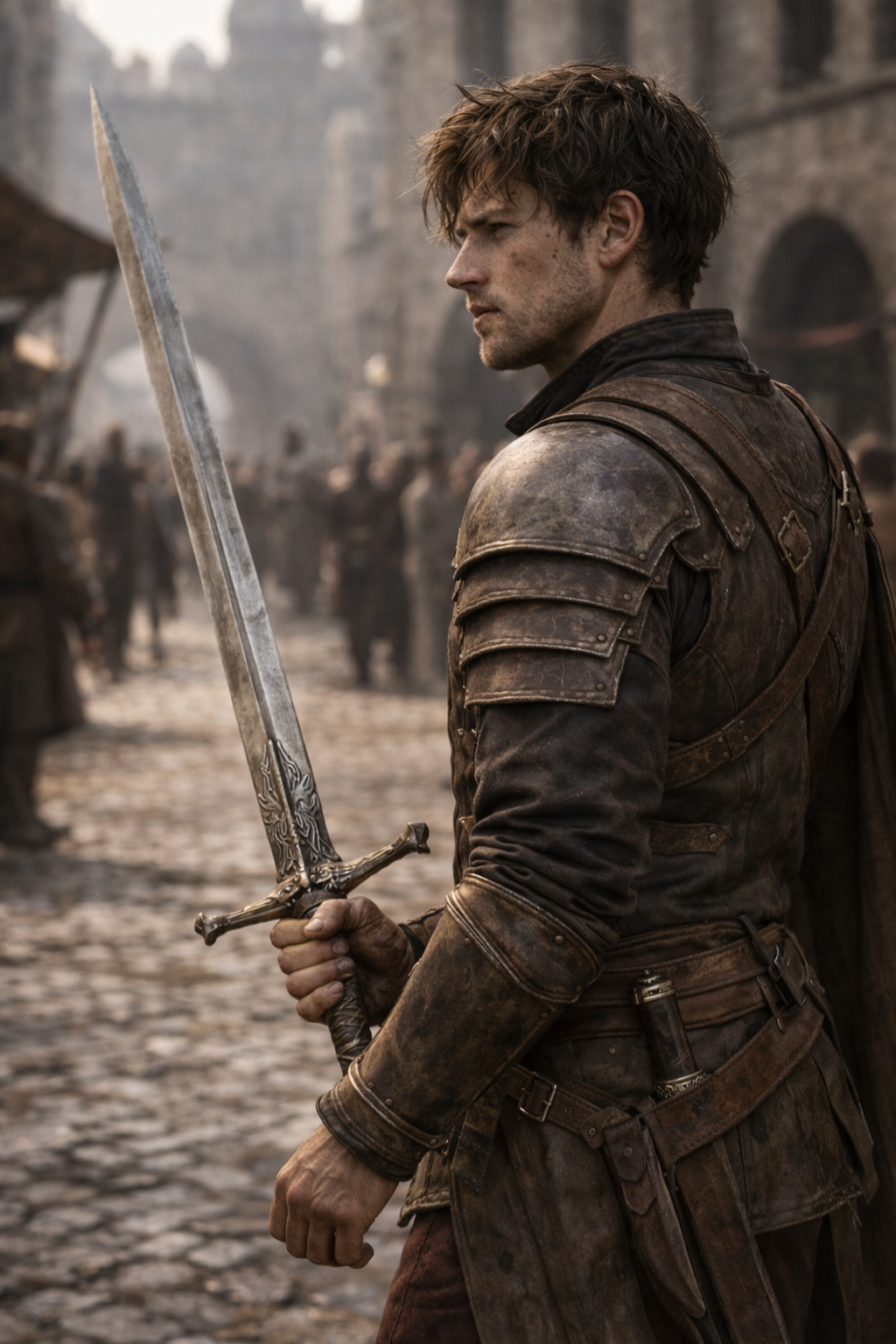
Magnus Alwyn
Magnus hails from the open Plains, where distance, wind, and hard seasons shape both land and people. He carries a quiet longing for the life he left behind — the wide horizon, his father, and his sisters — memories that remain sharper than the roads that pulled him away.
When famine swept the eastern provinces of Lavonshia, Magnus chose necessity over comfort, leaving home to join the Ka. Through discipline and resolve, he rose quickly to the rank of officer, known for his capability, physical strength, and steady presence in moments that demand control rather than impulse.
Grounded and dependable, Magnus moves forward without forgetting what he has lost. The Plains remain with him — not as a place he can return to, but as the measure by which he understands duty, endurance, and loyalty.
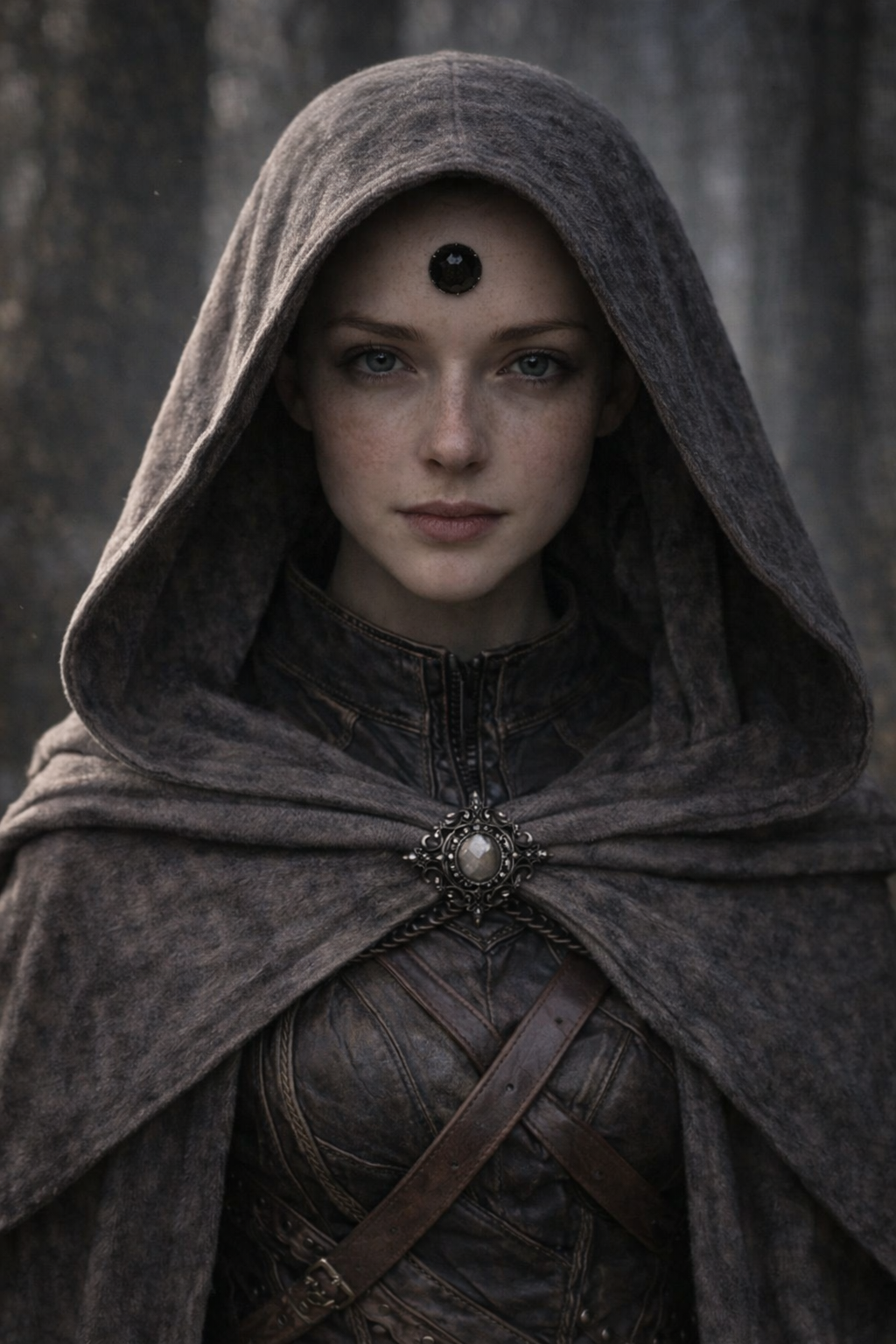
Daphne Vale
Daphne walks the path of the Gray Cloaks as one of the Honored Ones, marked by the familiar gray stone set in her forehead — a sign of her place among the mysterious order. She has only recently Ascended, still learning what it means to carry the weight of that calling.
Unlike most Honored Ones, Daphne has yet to master the careful distance and quiet mystery the Gray Cloaks are known for. Kind, thoughtful, and naturally outgoing, she speaks more freely than tradition might prefer, often revealing a warmth that stands in contrast to the reserved reputation of her order.
Though she carries the mark of the Gray Cloaks with honor, Daphne’s path is not as simple as it appears. Beneath her open nature lies a dangerous secret — one that, if discovered, could place her in conflict with the very order she has sworn to serve.
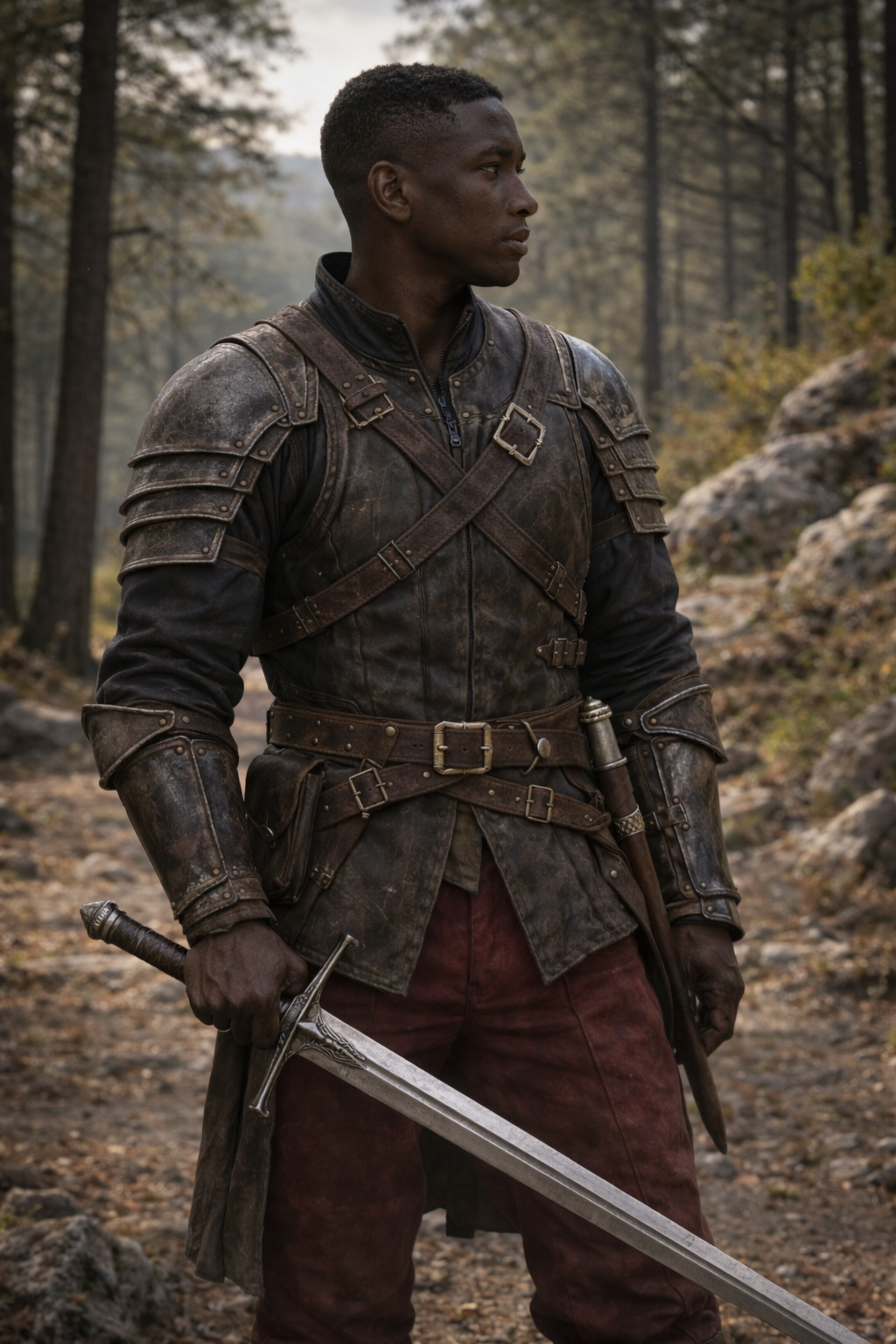
Tobias Karrow
Tobias is from the wind-blown Highlands, a rugged region known for its smithies and the finely forged weapons traded throughout Lavonshia and beyond. The Highlands shape both metal and people, and Tobias carries their influence in his easy manner, weathered resilience, and distinctive dialect.
Relaxed and approachable, Tobias balances his calm presence with a firm moral core. He serves in the Ka as Magnus Alwyn’s closest friend and trusted aide, valued for his judgment as much as his loyalty. Though capable of command, Tobias has never sought advancement that would require him to compromise his conscience.
Unpromoted by choice rather than ability, Tobias stands as a steady counterweight within the Ka — a reminder that strength is not measured solely by rank, and that integrity, once bent, is rarely reforged.
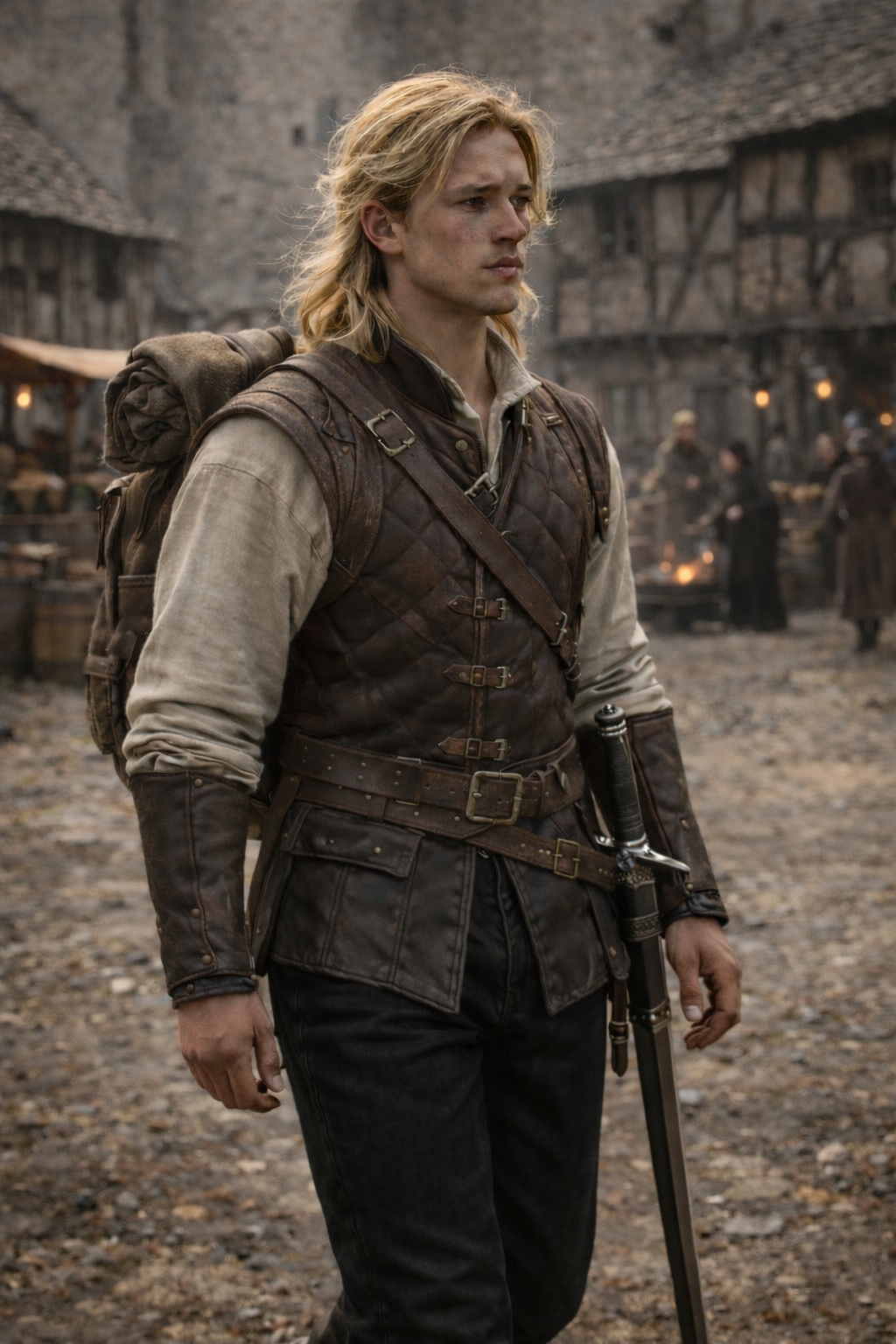
Col Blackwood
The son of Chelam's most influential High Elder, Col grew up surrounded by influence, expectation, and privilege, learning early how to command attention without asking for it. Handsome and confident, Col carries himself with the effortless swagger of someone rarely denied what he seeks.
Among Chelam’s young elite he is widely regarded as its most desirable bachelor — admired for his charm, envied for his lineage, and known for the skill he displays with a blade. Under the demanding instruction of the famed swordsman Cassian di’Loru, Col became an exceptional duelist, mastering technique with the same confidence he brings to every other part of his life.
For years he imagined a future defined by glory with the Ka, dreaming of campaigns that would secure his name in Dorak’s history. Yet when Aurelia entered his world, Col found himself drawn to her with a fascination he neither expected nor fully understands — a rare distraction from the path he once believed was his destiny.
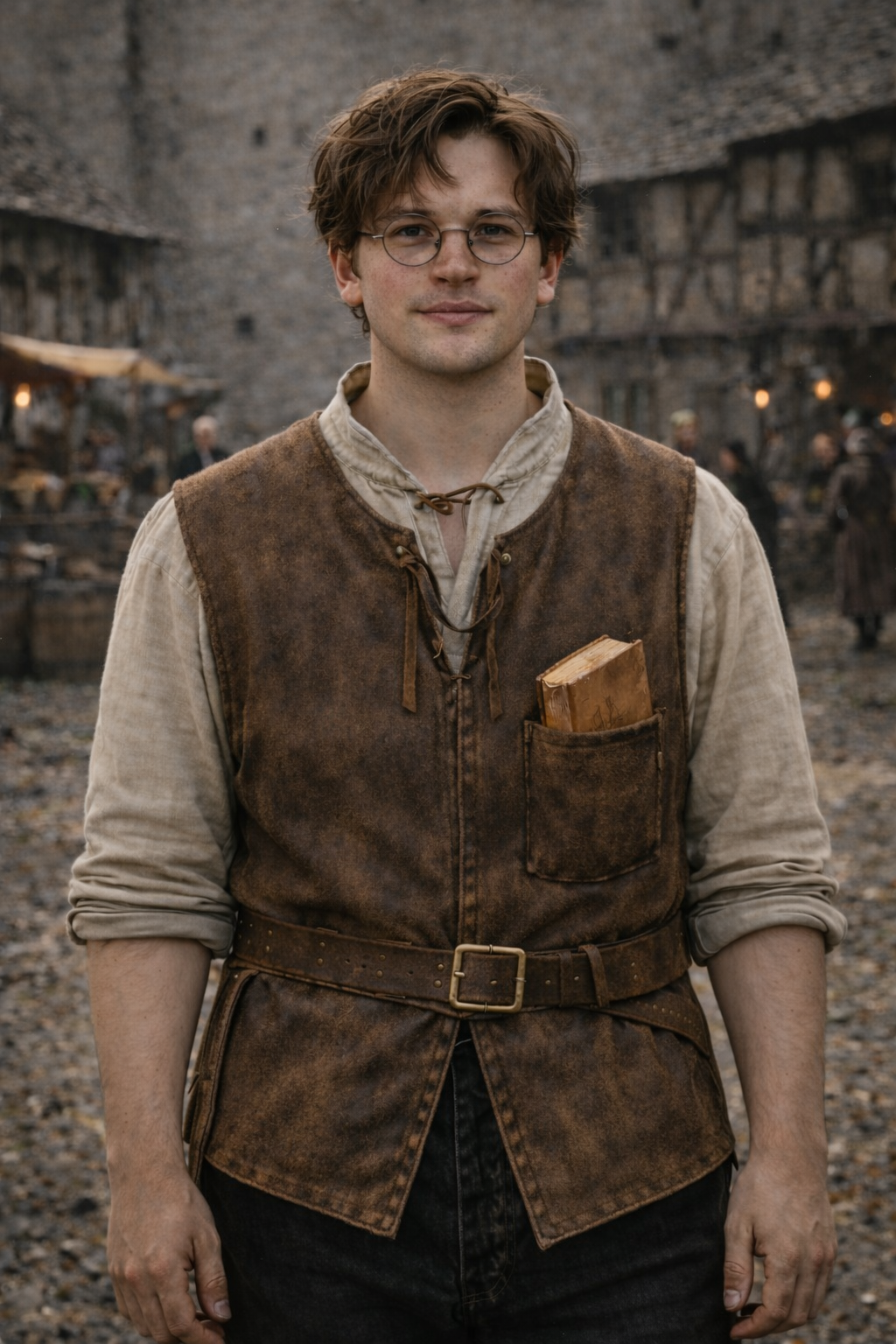
Eken Potterfeld
Eken grew up in Chelam surrounded not by ambition or influence, but by stories. Where others found their place in trade, craft, or politics, Eken found his among shelves of parchment and ink. Rarely seen without a book tucked into the pocket of his tunic, reading has become as natural to him as breathing.
Though Dorakians are not known for scholarly pursuits, Eken is an unusual exception. Over the years he has read every book in Chelam’s collections several times through, devouring stories and knowledge with tireless enthusiasm.
Cheerful, good-natured, and endlessly talkative, Eken is the kind of friend who can strike up a conversation with anyone — often long before they realize how much they’ve been talking. He shares a close bond with Aurelia, the two having grown up attending Chelam’s festivals and celebrations together, where Eken’s constant stream of thoughts, ideas, and observations has become as familiar as the music and lantern light of the gatherings themselves.
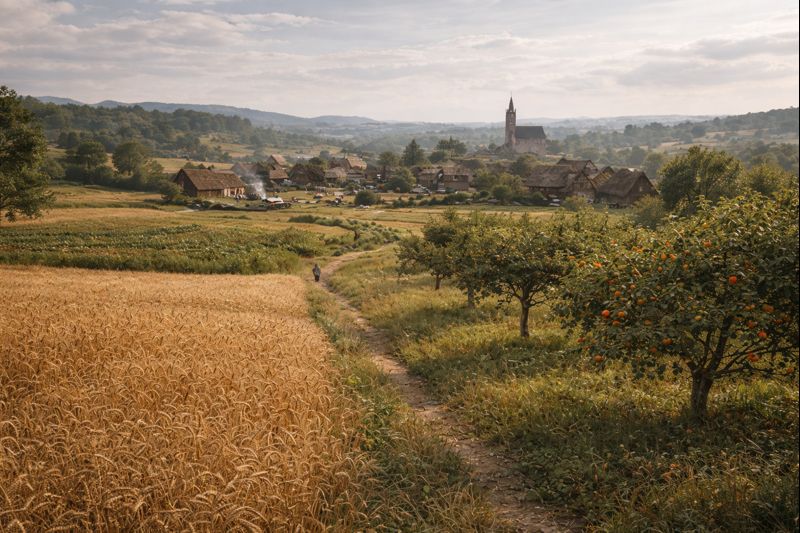
Dorak
The province of Dorak lies east of the Capitol, where the land opens into rolling hills and fertile valleys framed by the Tol Mountains. Orchards and grain fields dominate the countryside, shaping a way of life guided by seasons rather than politics. Sheltered by distance and terrain, Dorak has remained largely untouched by conflict for centuries.
Dorakians are known as hardy, welcoming people, deeply tied to the land and to one another. Cobblestone paths wind between villages and through groves of apple, chockberry, and mountain orange trees, while fields of amaranth grain stretch across the hills. Harvest season is a time of shared labor and easy conversation, carrying a sense of peace that defines the province.
At the heart of any Dorakian village stands its Great Hall, rising above the modest homes that surround it. It is the center of Dorakian life, hosting Elder Conclaves and the many festivals the people hold dear. In Dorak, community and celebration are not distractions from life—they are its foundation.